
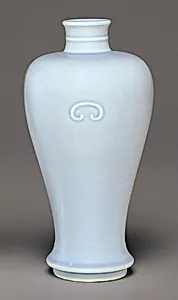
Vase, Meiping Shape
Kangxi period, 1662/1722
Medium
porcelain with pale blue glaze
Dimensions
overall: 21 x 10.8 cm (8 1/4 x 4 1/4 in.)
Classification
Decorative Art
Department
CSD
Museum
National Gallery of Art, Washington, D.C.
Credit
Widener Collection
Accession Number
1942.9.498
Rights
Public Domain
Art Historical Context
This elegant meiping vase, crafted during the Kangxi period (1662–1722) of China's Qing Dynasty, exemplifies the era's mastery of porcelain artistry. Standing at 21 x 10.8 cm, its classic pear-shaped form—tall and slender with a narrow neck and flared mouth—was traditionally designed to hold plum blossoms, evoking the poetic beauty of nature in Chinese culture. The pale blue glaze, a hallmark of Kangxi monochrome wares produced at Jingdezhen kilns, shimmers with a subtle, milky translucency, achieved through precise control of firing temperatures and glaze formulas rich in lime and iron. The Kangxi reign marked a golden age for imperial porcelain, with workshops innovating techniques that produced flawlessly thin bodies and vibrant yet understated glazes. This vase's serene blue hue reflects the emperor's patronage of refined aesthetics, blending Song dynasty influences with Qing technical prowess. As part of the Widener Collection at the National Gallery of Art, it offers a window into elite Qing decorative arts, prized for both utility and symbolism in scholarly gardens and elite interiors. Today, such pieces highlight porcelain's role as China's premier export, influencing global ceramics while embodying Confucian ideals of harmony and elegance.
About the Artist
Chinese Qing Dynasty · 1644–present
"Chinese Qing Dynasty" serves as a collective attribution in museum collections for anonymous artworks produced during China's Qing era (1644–1912), encompassing the works of imperial workshop artisans rather than a single individual. These creators operated primarily from the imperial kilns at Jingdezhen, where potters, painters, and enamellers collaborated under strict court oversight, though sp...