
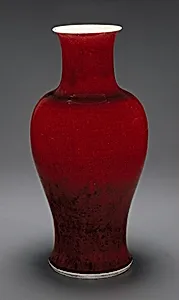
Vase
early 18th century
Medium
porcelain with oxblood glaze
Dimensions
overall: 42.7 x 21.6 cm (16 13/16 x 8 1/2 in.)
Classification
Decorative Art
Department
CSD
Museum
National Gallery of Art, Washington, D.C.
Credit
Widener Collection
Accession Number
1942.9.530
Rights
Public Domain
Art Historical Context
This elegant vase from China's Qing Dynasty, crafted in the early 18th century, exemplifies the pinnacle of imperial porcelain artistry. Standing at 42.7 x 21.6 cm, it features a striking oxblood glaze—a deep, vibrant red achieved through precise firing techniques with copper oxide. Produced likely at the famed Jingdezhen kilns, the official porcelain center, this piece showcases the dynasty's mastery of monochrome glazes, where subtle tonal variations from crimson to maroon create a luxurious, jewel-like sheen. During the Qing era (1644–1912), under emperors like Yongzheng or Qianlong, porcelain became a symbol of imperial power and technological innovation. Oxblood, or *sang de bœuf* glaze, was among the most coveted, its rich hue evoking sacrificial blood and auspicious vitality in Chinese culture. The glaze's production was notoriously challenging, requiring exact kiln temperatures to avoid defects, making flawless examples rare treasures for palaces and collectors. Now part of the Widener Collection at the National Gallery of Art, this vase highlights porcelain's global allure as both decorative art and cultural ambassador, bridging East and West in the 18th century. Visitors will appreciate its timeless elegance and the centuries of skill it represents.
About the Artist
Chinese Qing Dynasty · 1644–present
"Chinese Qing Dynasty" serves as a collective attribution in museum collections for anonymous artworks produced during China's Qing era (1644–1912), encompassing the works of imperial workshop artisans rather than a single individual. These creators operated primarily from the imperial kilns at Jingdezhen, where potters, painters, and enamellers collaborated under strict court oversight, though sp...