
Vase (part of a garniture)
ca. 1780–90
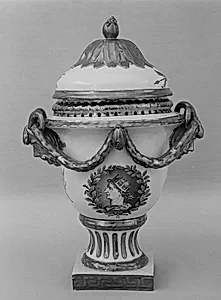
Medium
Hard-paste porcelain
Dimensions
Height: 11 1/2 in. (29.2 cm)
Classification
Ceramics-Porcelain
Culture
German, Fürstenberg
Department
European Sculpture and Decorative Arts
Museum
Metropolitan Museum of Art, New York, NY
Credit
Gift of Henry G. Marquand, 1894
Accession Number
94.4.353a, b
Rights
Public Domain
Tags
Art Historical Context
This elegant vase, crafted by the renowned Fürstenberg Porcelainufactory in Germany around 1780–90, stands as a fine example of late 18th-century European ceramics. Produced at the factory founded in 1747 in the principality of Fürstenberg it exemplifies the height of German porcelain production, rivaling Meissen and Sèvres. As part of a garniture matched set of vases designed for mantelpieces or tabletops—this 11½-inch (29.2 cm) hard-paste porcelain piece was meant to create symmetrical displays of opulence in aristocratic homes. Hard-paste porcelain, made from kaolin clay and fired at high temperatures, offered the prized translucency and durability of Chinese export wares while allowing intricate modeling and painting. Fürstenberg's output often blended Rococo exuberance with emerging Neoclassical restraint, and this vase likely features finely painted profiles of men, evoking classical cameos or medallions—a nod to antiquity's revival during the Enlightenment. Today, it graces the Metropolitan Museum of Art's European Sculpture and Decorative Arts department, a gift from Henry G. Marquand in 1894. Such garnitures not only showcased technical mastery but also symbolized wealth and refined taste, bridging art and everyday luxury in Georgian-era interiors.