
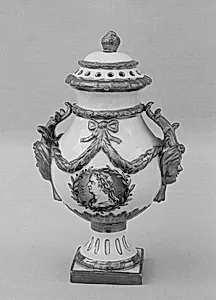
Vase (part of a garniture)
ca. 1780–90
Medium
Hard-paste porcelain
Dimensions
Height: 7 1/2 in. (19.1 cm)
Classification
Ceramics-Porcelain
Culture
German, Fürstenberg
Department
European Sculpture and Decorative Arts
Museum
Metropolitan Museum of Art, New York, NY
Credit
Gift of Henry G. Marquand, 1894
Accession Number
94.4.354a, b
Rights
Public Domain
Tags
Art Historical Context
This delicate vase, part of a garniture from the Fürsten Porcelain Manufactory Germany (ca. 0–90), captures the refined elegance of late 18th-century European decorative arts. Standing 7½ inches tall and crafted from hard-paste porcelain—a durable, translucent material developed in Europe to rival Chinese imports—it likely features finely painted profile portraits of men,oking classical cameos and Roman busts popular in the Neoclassical era. Founded in 1747, the Fürstenberg manufactory as a major center for German porcelain production, competing with renowned factories like Meissen. Garnitures, sets of matching vases displayed symmetrically on mantels or cabinets, were coveted symbols of wealth and taste in aristocratic homes, blending functionality with opulent ornamentation. The hard-paste technique, involving high-fired kaolin clay, allowed for intricate detailing and subtle glazes that showcased the artisans' mastery. Today, housed in the Metropolitan Museum of Art as a 1894 gift from Henry G. Marquand this piece highlights porcelain's role in everyday luxury and cultural exchange, inviting us to the artistry behind these enduring treasures.