
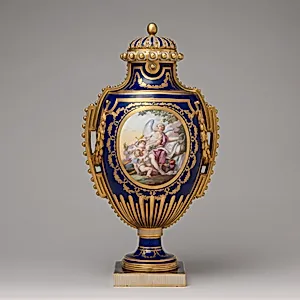
Vase (vase à panneaux or à perles)
ca. 1779
Medium
Soft-paste porcelain
Dimensions
Height: 19 in. (48.3 cm)
Classification
Ceramics-Porcelain
Culture
French, Sèvres
Department
European Sculpture and Decorative Arts
Museum
Metropolitan Museum of Art, New York, NY
Credit
Gift of Samuel H. Kress Foundation, 1958
Accession Number
58.75.80a–c
Rights
Public Domain
Tags
Art Historical Context
This elegant vase, produced by the renowned Sèvres Manufactory 1779, exemplifies pinnacle of French porcelain artistry during the late 18th century. Standing at 19 inches tall, it belongs to the "vase à panneaux or àles" type, featuring paneled designs adorned with beaded motifs and playful putti—chubby, winged cherubs symbolizing love and joy. Crafted from soft-paste porcelain, Sèvres specialty that mimicked the translucency of prized Chinese imports while allowing intricate modeling and vibrant overglaze enamels, this piece was likely destined for royal or aristocratic interiors under Louis XVI. Sèvres, the official porcelain works of the French crown since 1756, revolutionized European ceramics with its technical innovations and opulent styles blending Rococo exuberance with emerging Neoclassicism. The soft-paste body enabled delicate relief work and gilding, making such vases status symbols of refined taste. Donated to the Metropolitan Museum of Art by the Samuel H. Kress Foundation in 1958, this treasure invites visitors to appreciate how porcelain bridged art and luxury, capturing the elegance of pre-Revolutionary France.
About the Artist
Sèvres Manufactory · 1740–present
The Sèvres Manufactory, one of Europe's premier porcelain producers, was established in 1740 as the Manufacture de Vincennes under the patronage of Queen Marie Leszczyńska, who sought to rival Meissen and Chantilly porcelains with French soft-paste innovations. Initially a private venture, it relocated to Sèvres in 1756 in a purpose-built facility designed by architect Laurent Lindet near Madame d...