
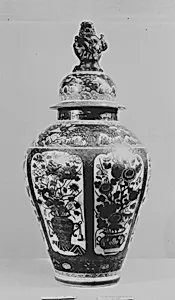
Vase with cover
Unknown Artist
1680
Medium
Porcelain decorated in colored enamels and gold (Arita ware, Imari type)
Dimensions
H. (with cover) 35 1/4 in. (89.5 cm)
Classification
Ceramics
Culture & Period
Japan · Edo period (1615–1868)
Department
Asian Art
Museum
Metropolitan Museum of Art, New York, NY
Credit
Gift of Mrs. V. Everit Macy, 1923
Accession Number
23.225.387a, b
Rights
Public Domain
Tags
Art Historical Context
This stunning vase with cover, standing an impressive 35¼ inches tall, exemplifies the pinnacle of Japanese porcelain artistry from the Edo period (1615–1868). Produced around 1680 in Arita, Saga Prefecture, it belongs to the renowned Imari type—named after the port from which these wares were exported. Crafted from fine porcelain and lavishly decorated in vibrant colored enamels and gold its surface bursts with floral and plant motifs, capturing the natural elegance prized in Japanese aesthetics. Arita kilns revolutionized ceramics in the early 17th century by mastering porcelain production, inspired by Chinese techniques but infused with Japanese flair. Overglaze enameling allowed for bold, multicolored designs fired at lower temperatures, enabling intricate gold accents that shimmered like jewels. Imari vases like this one gained immense popularity in Europe during the 17th and 18th centuries, symbolizing exotic luxury and influencing Western decorative arts. A generous gift to the Metropolitan Museum of Art from Mrs. V. Everit Macy in 1923, this piece invites visitors to marvel at Edo Japan's cultural export prowess, blending technical innovation with timeless beauty.