
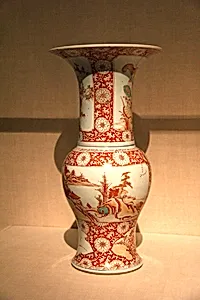
清康熙 景德鎮窯青花山水庭園瓶|Vase with landscape, flowers, and gardens
Unknown Artist
Medium
Porcelain painted in underglaze copper red (Jingdezhen ware)
Dimensions
H. 17 1/2 in. (44.5 cm); Diam. 9 in. (22.9 cm)
Classification
Ceramics
Culture & Period
China · Qing dynasty (1644–1911), Kangxi period (1662–1722)
Department
Asian Art
Museum
Metropolitan Museum of Art, New York, NY
Credit
Bequest of Edmund C. Converse, 1921
Accession Number
21.175.5
Rights
Public Domain
Tags
Art Historical Context
This elegant vase, crafted in Jingdezhen—the renowned porcelain capital of China—dates to the Kangxi period (1662–1722) of the Qing dynasty. Standing 17½ inches tall, it features intricate underglaze copper red decorations depicting serene landscapes, blooming flowers, gardens, and delicate insects. Jingdezhen kilns, favored by imperial courts, produced some of the finest porcelains of the era, blending technical mastery with naturalistic motifs that evoked the harmony of nature. The use of underglaze copper red, a challenging technique where copper oxide is applied beneath the glaze before high-temperature firing, was perfected during Kangxi's reign. This method yielded vibrant, stable reds that contrasted beautifully with the porcelain's crisp white body, often combined with blue underglaze elements (as suggested by the Chinese title *qinghua*, or "blue-and-white"). Such vases symbolized prosperity and refinement, adorning elite homes and later influencing global ceramics trade. A bequest to the Metropolitan Museum of Art in 1921, this piece highlights the Kangxi era's artistic zenith, when porcelain became a canvas for poetic scenes of mountains and gardens, inviting viewers to contemplate the fleeting beauty of the natural world.