
Venus en Adonis
c. 1658
Medium
oil on canvas
Dimensions
168; 6; 230
Rights
Public Domain
About this artwork
oil on canvas
Art Historical Context
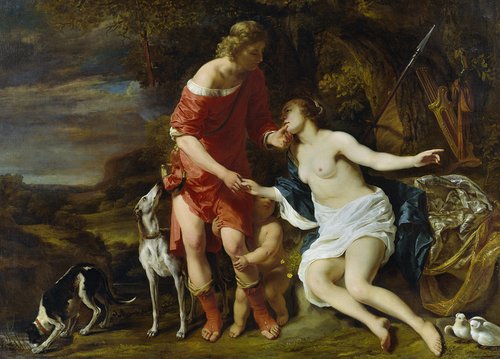
Ferdinand Bol's *Venus en Adonis* (c. 1658) captures a tender yet foreboding moment from classical mythology, drawn from Ovid's *Metamorphoses*. The painting depicts the goddess Venus pleading with her mortal lover Adonis to abandon a perilous hunt, foreshadowing his tragic death by a wild boar's tusk. This large-scale oil on canvas (168 × 230 cm) exemplifies the Dutch Golden Age's fascination with mythological narratives, blending sensuality and drama on an ambitious format suited for grand interiors. As a prominent pupil of Rembrandt, Bol infused his work with the master's dramatic chiaroscuro and lush brushwork, though he developed a brighter, more polished style reflective of Amsterdam's prosperous 17th-century art scene. The oil medium allowed Bol to render Venus's luminous skin and flowing drapery with exquisite texture and depth, highlighting the emotional intensity of the lovers' embrace against a verdant landscape. Housed in the Rijksmuseum, this masterpiece underscores Bol's transition from Rembrandt's shadow to a leading portraitist and history painter, celebrating themes of love's fragility that resonated in Baroque Europe. Visitors will appreciate its emotional pull and technical virtuosity, a window into the era's humanistic ideals.
About the Artist
Ferdinand Bol · 1616–1680
As a very young man, Bol moved to Amsterdam, where he worked under the direction of Rembrandt, with whom he formed a friendship. Comment on works: Religious; History; Portraits