
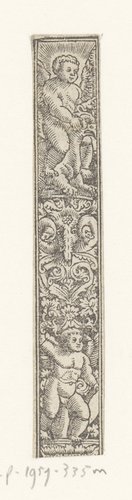
Verticaal fries met twee putti
1500 - 1599
Medium
paper
Dimensions
88; 14
Rights
Public Domain
About this artwork
height 88 mm x width 14 mm
Art Historical Context
Nestled in the Renaissance era (1500–1599), *Verticaal fries met putti*—a vertical frieze featuring playful putti—is a delicate anonymous work on paper, measuring just 88 mm high by 14 mm wide. These cherubic figures, with their chubby forms and winged innocence, were beloved motifs in 16th-century European art symbolizing joy, divinity, and the exuberance of youth. Likely from the Low Countries given the Dutch title, this tiny piece captures the ornate decorative spirit of the period, where such friezes adorned architecture, manuscripts, and furnishings. Crafted on paper, a humble yet versatile medium, the artwork exemplifies the era's booming market for ornamental designs. Artists and workshops produced small-scale sketches like this for use as patterns in printmaking, textiles, or stone carving, democratizing Renaissance beauty beyond grand commissions. Its narrow, vertical format suggests it was conceived for pilasters or narrow panels, highlighting the ingenuity of adapting lavish motifs to intimate spaces. Though anonymous, this gem offers a window into everyday artistic production, reminding us how putti frolicked through homes and churches alike, blending whimsy with spiritual grace. A testament to the unsung creators of the Renaissance decorative arts!