
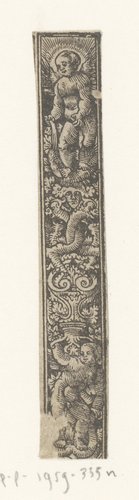
Verticaal fries met twee putti
1500 - 1599
Medium
paper
Dimensions
93; 14
Rights
Public Domain
About this artwork
blad: hoogte 93 mm x breedte 14 mm
Art Historical Context
Nestled in the Renaissance era (1500–1599), this delicate *Verticaal fries met twee putti*—a vertical frieze featuring two putti, or cherubic figures—captures the whimsical spirit of16th-century European decorative arts. Created anonymously on paper and measuring just 93 mm high by 14 mm wide, an intimate artwork, likely a preparatory sketch or pattern design for larger architectural or sculptural elements. The narrow elongated format evokes friezes adorning buildings, where such motifs brought joy and divine playfulness to everyday spaces. Putti were beloved Renaissance symbols of innocence and frolic, popularized in Italian art but widely adopted across Northern Europe, including the Low Countries. This piece reflects the era's revival of classical motifs, blending humanism with spiritual delight. Though anonymous, it exemplifies the skilled draughtsmanship of workshop artists, whose designs fueled the ornamental boom in frescoes, tapestries, and facades. Its survival on humble paper highlights the era's innovative use of portable media for idea-sharing among artisans, underscoring the collaborative creativity of Renaissance workshops. A tiny treasure, it invites us to imagine these cherubs dancing eternally along some grand hall.