
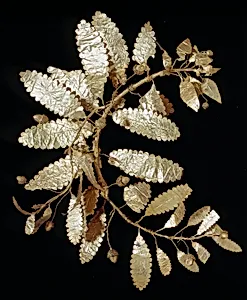
Victory Wreath
400-300 B.C.
Medium
Decorative Arts
Classification
Decorative Arts
Department
Smithsonian Collection
Museum
Smithsonian American Art Museum
Credit
Smithsonian American Art Museum, Gift of John Gellatly
Accession Number
1929.8.185.1
Rights
Public Domain
Tags
Art Historical Context
Behold the **Victory Wreath**, a artifact from ancient Greece dating to 400-300 B.C., in the realm of decorative arts from oak. Housed in the Smithsonian American Art Museum as part of the Smithsonian Collectionthanks to the generous gift of John Gellly—this wreath exemplifies the exquisite craftsmanship of the Classical period, where natural materials like oak were transformed into symbols of honor and achievement. In ancient Greek culture, victory wreaths prestigious awards bestowed upon victors in athletic competitions, most famously the Olympic Games sacred to Zeus. Oak, revered as the tree of Zeus, held profound symbolic power, representing strength, endurance, and divine favor. This wreath likely crowned a champion, evoking the thrill of triumph amid cheering crowds at Olympia. Though its creator remains unidentified, the wreath's survival speaks to the enduring artistry of ancient decorative traditions. It invites us to ponder the timeless human pursuit of excellence, bridging millennia to remind modern visitors of glory's fragile, leafy crown.
About the Artist
Unidentified ( ) · –