
View of Civitavecchia
17th century
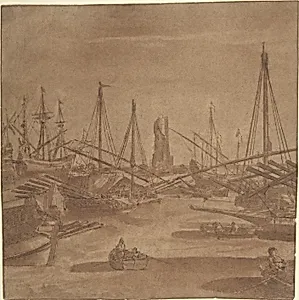
Medium
Pen and brown ink, brown wash over graphite
Dimensions
10 1/4 x 9 5/16 in. (26 x 23.7 cm)
Classification
Drawings
Department
Drawings and Prints
Museum
Metropolitan Museum of Art, New York, NY
Credit
Bequest of Harry G. Sperling, 1971
Accession Number
1975.131.96
Rights
Public Domain
Tags
Art Historical Context
Step into the sun-drenched harbor of Civitavecchia, a port near Rome, as captured in Claude Lorrain's exquisite 17th-century drawing *View of Civitavec*. Created by the French Baroque master Claude Gellée (known as Claude Lorrain), intimate sheet measures just 10¼ x 9⅜ inches, yet it brims with the artist's signature luminosity and poetic atmosphere. Using pen and brown ink with brown wash over graphite,orrain deftly sketches ships at anchor, distant architecture, and tiny human figures, evoking the gentle rhythm of Mediterranean life. Lorrain revolutionized landscape art, blending classical ideals with observed nature to create idealized seascapes that influenced generations, from British Romantics to Impressionists. Unlike his grand oil paintings, this preparatory drawing reveals his meticulous process: graphite underdrawing for structure, ink lines for crisp definition, and translucent washes for shimmering light and depth. Such works were prized by collectors for their spontaneity and mastery of tonal effects, bridging studio preparation and finished masterpieces. Housed in the Metropolitan Museum of Art's Department of Drawings and Prints through the 1971 bequest of Harry G. Sperling, this gem offers a window into 17th-century Italy's vibrant coastal world, reminding us how Lorrain turned everyday views into timeless visions of harmony between sea, sky, and humanity.
About the Artist
Claude Lorrain (Claude Gellée) · 1604–1682
Claude Gellée was born around 1600 in the village of Chamagne in the Duchy of Lorraine, from which he would take the professional name by which history knows him: Claude Lorrain. Orphaned young, he traveled south to Rome as a teenager, eventually finding his way into the Naples workshop of Goffredo Wals before apprenticing with the Roman landscapist and fresco painter Agostino Tassi around 1622. F...