
Vignette
Classification
Department
Smithsonian Collection
Museum
Smithsonian American Art Museum
Credit
Smithsonian American Art Museum
Accession Number
1919-10-49
Rights
Public Domain
About this artwork
Research in Progress
Art Historical Context
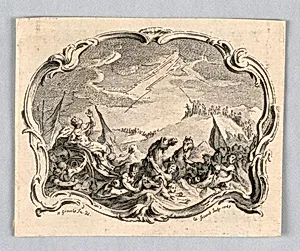
**Vignette** *François Joullain (France, 1697–1778), 1760–1761* Etching or engraving (medium research in progress) Smithsonian American Art Museum, Collection François Joullain, skilled French engraver of the Rococo era, created this delicate *Vignette* around 1760–1761, during the lavish final days of France's Ancien Régime. Working in Paris, Joullain specialized intricate prints that adorned books, decorative arts, and collector's albums. Vignettes like this one were small, ornamental designs—often floral, architectural, or figural—that framed text or stood alone as elegant embellishments, reflecting the period's love for playful asymmetry, graceful curves, and refined ornamentation. As a print, the work showcases the technical mastery of 18th-century engraving, where artists like Joullain used burins to carve fine lines into metal plates, producing multiples for widespread appreciation. This piece captures the Rococo spirit of whimsy and sophistication, bridging fine art and everyday luxury just before the revolutionary upheavals of the 1770s and 1780s. Housed in the Smithsonian American Art Museum's collection, it invites us to savor the artistry of a bygone age, where even a modest vignette held cultural charm. Ongoing research promises to reveal more about its precise subject and context—stay tuned!