
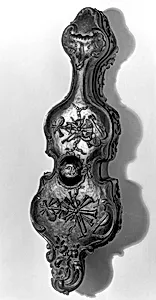
Violin or Viol Case
Unknown Artist
late 18th century
Medium
wood
Dimensions
L. 26 1/2 in. (67.3 cm) ;W. 8 11/16 in. (22.1 cm); D. 4 15/16 inches (12.5 cm)
Classification
Chordophone-Accessories
Culture
German
Department
Musical Instruments
Museum
Metropolitan Museum of Art, New York, NY
Credit
Funds from various donors, 1952
Accession Number
52.96.2
Rights
Public Domain
Art Historical Context
Step into the world of 18th-century music with this elegant *Violin or Viol Case crafted in late 18th-century Germany from finely worked wood. Measuring 26½ inches long, 8⅝ inches wide, and nearly 5 inches deep, it was designed to safeguard delicate chordophones—stringed instruments like violins or viols—during travel or storage. These cases were essential for musicians in an era when chamber music and orchestral performances flourished across Europe, protecting irreplaceable instruments from the rigors of the road. German craftsmanship shines through in its sturdy yet refined construction, reflecting the region's renowned tradition of lutherie and instrument-making. Wood, a versatile and resonant material, allowed for both durability and aesthetic appeal, often shaped with precise joinery to hug the instrument's contours perfectly. Acquired by The Metropolitan Museum of Art in 1952 through generous donor funds, this accessory offers a glimpse into the daily life of performers during the Classical period, when composers like Mozart and Haydn elevated string music to new heights. Though the artist remains unknown, the case's survival underscores the cultural reverence for music in German society, bridging art, utility, and sound in a single, timeless object.