
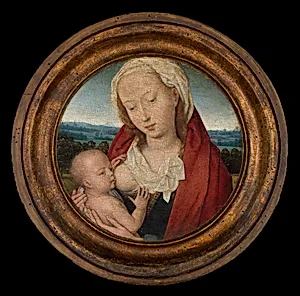
Virgin and Child
ca. 1475–80
Medium
Oil on wood
Dimensions
Overall, with integral frame, diameter 9 3/4 in. (24.8 cm); painted surface diameter 6 7/8 in. (17.5 cm)
Classification
Paintings
Department
European Paintings
Museum
Metropolitan Museum of Art, New York, NY
Credit
The Friedsam Collection, Bequest of Michael Friedsam, 1931
Accession Number
32.100.59
Rights
Public Domain
Tags
Art Historical Context
Hans Memling's *Virgin and Child*, created around 1475–80, is a exquisite tondo—a circular oil painting on wood—that captures the tender intimacy of the Madonna nursing the infant Christ. Measuring just 6 7/8 inches in painted diameter (with an integral frame bringing it to 9 3/4 inches), this diminutive work from the Metropolitan Museum of Art's European Paintings collection was designed for private devotion, likely adorning a bourgeois home or chapel in 15th-century Bruges, where Memling flourished. As a leading figure in the Early Netherlandish Renaissance, Memling drew from masters like Jan van Eyck, employing oil's translucent glazes to achieve luminous skin tones, intricate drapery folds, and a serene, jewel-like quality. The nursing motif humanizes the Virgin, emphasizing her maternal role and evoking themes of divine nourishment and humility, popular in Northern European art amid growing lay piety during the late Gothic period. This Friedsam Collection gem showcases Memling's refined realism and devotional focus, blending spiritual grace with everyday warmth—a perfect emblem of Flemish painting's golden age, inviting viewers to contemplate the sacred in the personal.