
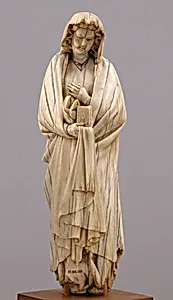
Virgin of the Annunciation
Unknown Artist
late 13th century
Medium
Ivory
Dimensions
Overall: 7 3/16 x 2 5/16 x 1 3/4 in. (18.2 x 5.9 x 4.4 cm)
Classification
Ivories
Culture
French
Department
Medieval Art
Museum
Metropolitan Museum of Art, New York, NY
Credit
Gift of J. Pierpont Morgan, 1917
Accession Number
17.190.299
Rights
Public Domain
Tags
Art Historical Context
This exquisite *Virgin of the Annunciation*, in the late 13th century an unknown French artist, captures a pivotal moment in Christian iconography: the Virgin Mary the angel Gabriel's divine message. Standing just over seven inches tall, this delicate ivory sculpture hails from the height of the Gothic period in France, when such small-scale devotional objects flourished in workshops, particularly in Paris. Its intimate dimensions—7 3/16 x 2 5/16 x 1 3/4—suggest it was designed for private prayer, perhaps held in the hand during moments of contemplation. Crafted from elephant ivory, a prized medium for its creamy translucency and ability to hold intricate details, the figure exemplifies medieval carving techniques. Artisans achieved lifelike drapery folds and expressive gestures through careful undercutting and polishing, allowing light to play across the surface and enhance spiritual depth. Ivory's rarity and portability made it ideal for the nobility and clergy, symbolizing piety and prestige. Now housed in the Metropolitan Museum of Art's Medieval Art department, thanks to a 1917 gift from J. Pierpont Morgan, this sculpture offers a window into 13th-century French devotion. It reflects the era's emphasis on emotional realism in religious art, bridging the Romanesque and full Gothic styles, and invites visitors to ponder Mary's serene grace amid profound mystery.