
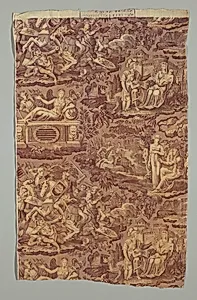
Vive France
ca. 1830
Classification
printed, dyed & painted textiles
Department
Smithsonian Collection
Museum
Smithsonian American Art Museum
Credit
Gift of Cora Ginsburg
Accession Number
1994-80-22-a,b
Rights
Public Domain
About this artwork
Research in Progress
Art Historical Context
"Vive France," created around 1830 by the French textile firm Gonssoll Frères, captures a burst of national pride through its vibrant printed, dyed, and painted textile design. Produced during a pivotal moment in French history—the July Revolution of 1830, which toppled the Bourbon monarchy and ushered in the July Monarchy—this piece likely served as a handkerchief, banner, or decorative fabric emblazoned with patriotic fervor. The bold title, meaning "Long live France," the era's revolutionary zeal and public celebrations. Gonssollin Frères, based in Lyon, France's historic silk-weaving capital, exemplified the innovative textile techniques of the time. Combining printing, dyeing, and hand-painting allowed for intricate patterns and vivid colors on fabric, making such items accessible symbols of identity and loyalty. These methods highlighted the Industrial Revolution's influence on craftsmanship, blending artistry with mass production. Now part of the Smithsonian American Art Museum's collection, thanks to a gift from textile expert Cora Ginsburg, "Vive France" offers a tangible link to 19th-century European fervor. Though research continues, it invites us to ponder how everyday textiles wove politics into daily life, bridging French history with American collections.