
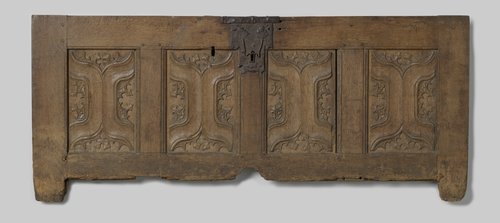
Voorbord van een kist van eikenhout
ca. 1500 - ca. 1550
Medium
wood (plant material)
Dimensions
7.5; 161; 70
Rights
Public Domain
About this artwork
height 70 cm x width 161 cm x depth 7.5 cm
Art Historical Context
### Voorbord van een kist van eikenhout This striking oak wood panel, titled *Voorbord van een kist van eikenhout* (Front Panel of an Oak Chest), dates to around 1500–1550 and hails from the anonymous workshops of the Northern Renaissance in the Low Countries. Measuring approximately 70 cm high, 161 cm wide, and 7.5 cm deep, it served as the decorative front of a storage chest, a staple of household furniture during this era. Oak was the material of choice for its strength, fine grain, and workability, making it ideal for both functional pieces and elaborate carvings that showcased a family's wealth and piety. In the late medieval and early Renaissance periods, such kists were essential for storing linens, clothing, and valuables, often given as dowry gifts or wedding presents. The front panel, being the most visible part, was typically the focus of artistic effort—crafted with precision to withstand daily use while potentially featuring intricate reliefs or motifs reflective of local traditions. Though the artist remains unknown, this piece embodies the skilled, guild-based craftsmanship of Flemish or Dutch woodworkers, who blended Gothic lingering forms with emerging Renaissance humanism. Today, this panel offers a window into 16th-century domestic life, highlighting how everyday objects doubled as canvases for cultural expression. Its survival underscores oak's enduring legacy in European decorative arts, inviting us to imagine the homes and hands that once cherished it. (198 words)
About the Artist
anonymous
In the vast tapestry of art history, "Anonymous" stands not as a singular individual but as a collective designation for countless unidentified creators whose works have endured across millennia. These artists, spanning prehistoric cave painters to medieval illuminators and folk craftsmen, produced the foundational layers of human visual culture. Prior to the Renaissance, when individual fame emer...