
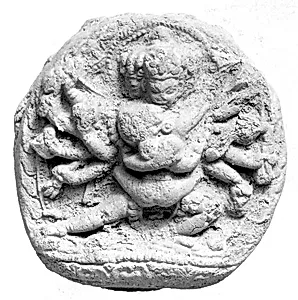
Votive Plaque with Three-Headed Deity
Unknown Artist
10th–16th century
Medium
Clay
Dimensions
2 1/4 x 2 1/4 in. (5.7 x 5.7 cm)
Classification
Sculpture
Culture
Tibet
Department
Asian Art
Museum
Metropolitan Museum of Art, New York, NY
Credit
Rogers Fund, 1930
Accession Number
30.32.77
Rights
Public Domain
Art Historical Context
This petite clay votive plaque, measuring just 2¼ x 2¼ inches, hails from Tibet and dates to the 10th–16th century, a formative era for Tibetan Buddhism. Crafted by an unknown artist, it depicts a striking three-headed deity, a often symbolizing multifaceted divine powers in tantric traditions—uniting wisdom, compassion, and wrathful protection in one form. Such small sculptures were cherished as devotional objects, offered at shrines or carried by pilgrims for personal blessings and spiritual safeguarding. Made from molded clay, the plaque exemplifies accessible artistry in medieval Tibet, where terracotta allowed widespread production of sacred imagery despite remote Himalayan conditions. Its compact size and durable medium made it ideal for everyday rituals, reflecting the democratized spirituality of the period. Acquired through the Rogers Fund in 1930, this piece now resides in the Metropolitan Museum of Art's Asian Art Department, offering visitors a tangible glimpse into Tibet's rich votive culture. (178 words)