
Vrede van Dresden
1745
Medium
striking (metalworking)
Dimensions
29.61; 4.4
Rights
Public Domain
About this artwork
Gift of J.M. van Gelder-Nijhoff
Art Historical Context
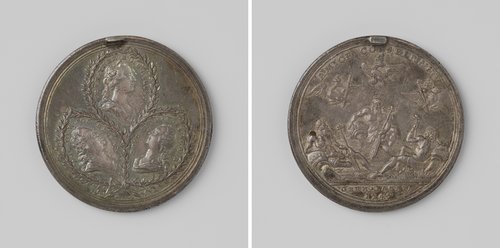
**Vrede van Dresden (Peace of Dresden)** *Andreas Vestner, 5* *Struck medal: diameter 4.4 cm, 29.61 g* *Gift of J.M. van Gelder-Nij* Crafted in 1745 by the skilled medalist Andreas Vestner *Vrede van Dresden* a finely struck medal commemorating the Peace of, a pivotal treaty that the Second Silesian War. This compact artwork, measuring just 4.4 cm in diameter and weighing 29.61 grams, exemplifies 18th-century metalworking artistry. The "striking" technique—pressing a detailed die into softened metal under immense force—allowed Vestner to achieve intricate relief designs with sharp clarity, a hallmark of European medal-making during the Baroque era. Such medals were prized as portable symbols of diplomacy, blending numismatic precision with sculptural finesse. Historically, the treaty signed on December 14, 1745, between Prussia's Frederick the Great and Austria's Maria Theresa temporarily halted hostilities, reshaping power dynamics in the War of the Austrian Succession. Vestner's medal captures this moment of fragile reconciliation, likely featuring allegorical motifs of peace like olive branches or clasped hands—common in such commemoratives. Its survival as a gift from J.M. van Gelder-Nijhoff underscores its value in museum collections, offering visitors a tangible link to Enlightenment-era geopolitics and the era's masterful craftsmanship in miniature form.