
Vrede van Rastatt
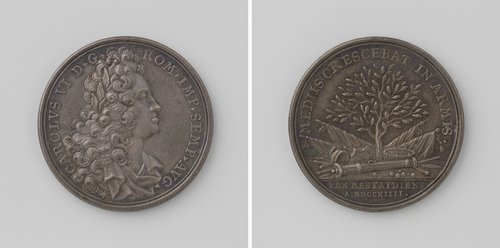
Medium
striking (metalworking)
Dimensions
3.2; 15.38
Rights
Public Domain
About this artwork
diameter 3.2 cm x weight 15.38 gr
Art Historical Context
### Vrede van Rastatt Crafted in 1714 by German medallist Georg Wilhelm Vestner, *Vrede van Rastatt is a finely struck medal measuring just 3.2 cm in diameter and weighing .38 grams. This petite metalwork exemplifies the artistry of early 18th-century numismatics, where small-scale objects carried monumental historical weight. Medals like this were prized collectibles, often exchanged as diplomatic gifts or personal mementos, blending sculpture's precision with coin-like reproducibility. The title, translating to "Peace of Rastatt," directly references the Treaty of Rastatt, a pivotal accord signed that year between France and the Holy Roman Empire. It effectively ended the War of the Spanish Succession (1701–1714), redrawing Europe's power map and securing Bourbon rule in Spain while curbing French expansion. Vestner's work immortalizes this fragile peace, likely featuring symbolic motifs of harmony amid the era's ornate Baroque style—think laurel wreaths, olive branches, or allegorical figures celebrating resolution. Vestner's mastery shines in the striking technique, a metalworking process using dies to imprint intricate designs under high pressure. This allowed exceptional detail on such a modest canvas, making the medal both a historical artifact and a testament to technical innovation. Gaze closely at its surfaces to appreciate how Vestner captured diplomacy's triumph in enduring bronze or silver, inviting us to reflect on peace's enduring allure.
About the Artist
Georg Wilhelm Vestner · 1677–1740
German, Schweinfurth 1677–1740 Nuremberg