
Vue générale de la Cathédrale de Rouen
1852–54
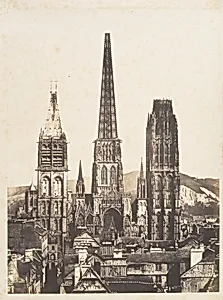
Medium
Salted paper print from glass negative
Dimensions
33.6 x 25.1 cm (13 1/4 x 9 7/8 in. )
Classification
Photographs
Department
Photographs
Museum
Metropolitan Museum of Art, New York, NY
Credit
Harris Brisbane Dick Fund, 1995
Accession Number
1995.96.2
Rights
Public Domain
Tags
Art Historical Context
Edmond Bacot's *Vue générale de la Cathale de Rouen* (1852–54) a pioneering photographic glimpse of one of France's most iconic Gothic landmarks. Captured during the early years of photography, this salted paper print from a glass negative presents a crisp, overall view of Rouen Cathedral's ornate facade, with its towering spires, intricate tracery, and asymmetrical towers rising dramatically against the sky. Bacot, a lesser-known French photographer active in the 1850s, contributed to growing documentation of architectural heritage at a time when such sites were symbols of national pride amid France's Romantic fascination with the medieval past. The medium—a salted paper print, one of the first practical photographic processes—marks its historical significance. Invented in the 1830s by William Henry Fox Talbot, this technique involved coating paper with salt and silver nitrate, then exposing it to light for a direct positive image. Bacot's use of a glass negative allowed for sharper detail and multiple prints, revolutionizing how architecture could be recorded with unprecedented accuracy, free from the interpretive liberties of painting. Measuring 33.6 x 25.1 cm, this intimate yet precise image now resides in the Metropolitan Museum of Art, thanks to the Harris Brisbane Dick Fund of 1995. As an early photograph of Rouen Cathedral—later immortalized by Impressionists like Monet—this work bridges technical innovation and cultural reverence, inviting visitors to appreciate the cathedral's timeless grandeur through 19th-century eyes.