
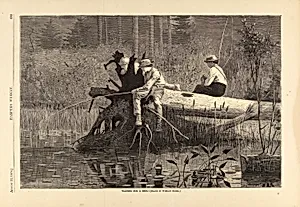
Waiting for a Bite, from Harper's Weekly, August 22, 1874
1874
Medium
Graphic Arts-Print
Classification
Graphic Arts-Print
Department
Smithsonian Collection
Museum
Smithsonian American Art Museum
Credit
Smithsonian American Art Museum, The Ray Austrian Collection, gift of Beatrice L. Austrian, Caryl A. Austrian and James A. Austrian
Accession Number
1996.63.99
Rights
Public Domain
Tags
Art Historical Context
### Waiting for a Bite Step into the serene world of Winslow Homer's *Waiting for a Bite*, captivating wood engraving published in *Harper's Weekly* on August 22, 1874. This graphic arts print from the Smithsonian American Art Museum depicts young boys perched by the water's edge, rods in hand, embodying the quiet anticipation of a fishing outing. Homer, a leading figure in American Realism, masterfully captured everyday rural life during the post-Civil War era, when such simple pleasures offered respite amid national rebuilding. Homer's prowess as an illustrator shines through in the intricate black-and-white lines of this medium, a staple of 19th-century magazines like *Harper's Weekly*. The technique allowed for detailed textures—from rippling water to the boys' patient expressions—bringing vivid scenes to mass audiences without color. His style emphasized natural light and unvarnished truth, foreshadowing his later iconic paintings of American landscapes and seascapes. This charming piece highlights childhood innocence and the timeless joy of fishing, reflecting cultural values of leisure and connection to nature in Gilded Age America. Donated as part of The Ray Austrian Collection, it invites visitors to ponder the enduring appeal of Homer's observant eye on ordinary moments. (198 words)
About the Artist
Winslow Homer · 1836–1910
Winslow Homer (1836-1910) was one of America's greatest painters and a preeminent figure in 19th-century American art. Largely self-taught, Homer began his career as a commercial illustrator and Civil War correspondent for Harper's Weekly before becoming renowned for his powerful marine subjects and landscape paintings. His mastery of both oil and watercolor, combined with his uncompromising reali...