
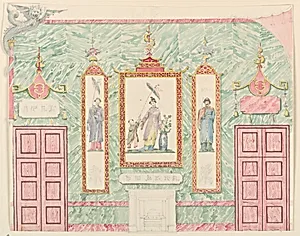
Wall Elevation, probably for the Banqueting Room, Royal Pavilion, Brighton
Classification
interiors
Department
Smithsonian Collection
Museum
Smithsonian American Art Museum
Credit
Museum purchase through gift of Mrs. John Innes Kane
Accession Number
1948-40-33
Rights
Public Domain
About this artwork
Elevation of a wall, with a mantelpiece in the center. Over the mantelpiece, and flanking it, are three painted panels with Chinese figures, set in ornamental frames against a marbleized background. Doorways at both sides with decorative devices above them. Narrow columns at corners.
Art Historical Context
Step into the opulent world of Regency England with Frederick Crace's *Wall Elevation, probably for the Banqueting, Royal Pavilion, Brighton (1815–22).ace, a prominent English interior decorator (1779–1859), crafted this design drawing as part of the lavish renovations to King George IV's seaside palace in Brighton. The Royal Pavilion, with its fantastical Indo-Chinese exteriors and interiors, epitomized the era's taste for exoticism, blending Eastern motifs with Western grandeur during a time of imperial expansion and romantic escapism. At the heart of this elevation is a central mantelpiece flanked by three painted panels featuring graceful Chinese figures, framed ornamentally against a richly marbleized background. Doorways on either side are adorned with elaborate devices overhead, while slender columns anchor the corners, creating a harmonious rhythm of symmetry and intricacy. Though the medium is unknown, such elevations were essential blueprints for artisans, guiding the execution of sumptuous wallpapers, gilding, and faux finishes that defined chinoiserie—a whimsical European interpretation of Chinese aesthetics popular among the elite. This artwork captures the Pavilion's Banqueting Room as a stage for royal revelry, highlighting Crace's skill in translating imperial fantasy into tangible luxury. Acquired by the Smithsonian American Art Museum through the gift of Mrs. John Innes Kane, it offers a glimpse into how 19th-century design fused cultures, influencing interiors worldwide.