
Wall pocket
ca. 1765
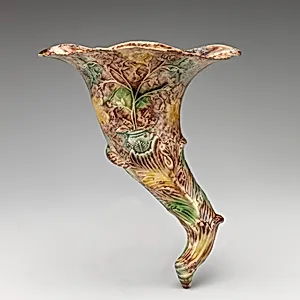
Medium
Lead-glazed earthenware (creamware)
Dimensions
Height: 8 3/4 in. (22.2 cm)
Classification
Ceramics-Pottery
Culture
British, Staffordshire
Department
European Sculpture and Decorative Arts
Museum
Metropolitan Museum of Art, New York, NY
Credit
Gift of Mrs. Russell S. Carter, 1944
Accession Number
44.39.38
Tags
Art Historical Context
This charming wall pocket, crafted around 1765 in Staffordshire, England, exemplifies the "Whieldon type" lead-glazed earthenware known as creamware. Standing at 8 3/4 inches tall, it was designed to be hung on a wall, serving as both a practical holder for small items like letters or flowers and a decorative accent for 18th-century homes. creamy glaze and likely floral motifs—evident from its plant-inspired tags—reflect the period's love for naturalistic designs, blending utility with elegance. Thomas Whieldon, a pioneering Staffordshire potter, and his workshop helped revolutionize ceramics...
About the Artist
Whieldon type
**Whieldon Type: Pioneers of Colorful Staffordshire Earthenware** Whieldon type pottery represents the work of anonymous Staffordshire potters active in Britain during the mid-18th century, roughly 1740–1770, who produced innovative lead-glazed earthenwares that brought vibrant color and whimsy to everyday tableware and ornaments. Emerging from the fertile pottery district of Staffordshire, these...