
Wall Sconce
Unknown Artist
1700–1730
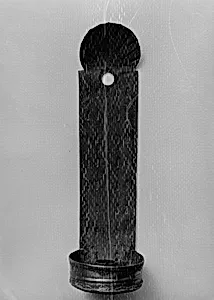
Medium
Tin
Dimensions
13 x 4 3/4 in. (33 x 12.1 cm)
Classification
Wall sconce
Department
The American Wing
Museum
Metropolitan Museum of Art, New York, NY
Credit
Rogers Fund, 1933
Accession Number
33.114.1
Rights
Public Domain
Art Historical Context
This elegant wall sconce, crafted from tin around 1700–1730, exemplifies the practical artistry of early American colonial households. Measuring a modest 13 x 4 3/4 inches, it was designed to hold a candle, casting a warm glow while adding subtle decoration to interior walls. Produced by an unknown artisan, such pieces were hallmarks of everyday life in the American colonies, where tin—imported as thin sheets from England—was an affordable, versatile medium for household goods. Tin sconces like this one highlight the ingenuity of colonial craftsmen, who punched, shaped, and sometimes painted the metal to create functional yet ornamental lighting. During this period, as settlements grew in regions like New England and the Mid-Atlantic, these fixtures illuminated homes without the extravagance of imported silver or brass equivalents, reflecting a burgeoning American aesthetic of simplicity and utility. Their pierced designs often allowed light to flicker through intricate patterns, blending form and function. Acquired through the Rogers Fund in 1933 and housed in The Metropolitan Museum of Art's American Wing, this sconce offers visitors a tangible glimpse into 18th-century domesticity, underscoring how ordinary objects embodied the resourcefulness and emerging identity of early America.