
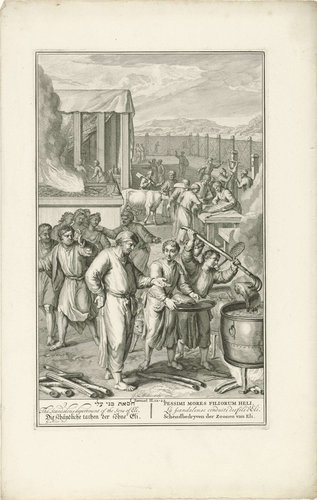
Wangedrag van de zonen van Eli
1720 - 1728
Medium
engraving
Dimensions
355; 220
Rights
Public Domain
About this artwork
collector's mark: Lugt 2228
Art Historical Context
### Wangedrag van de zonen Eli (The Wickedness of the Sons of) Created by Dutch engraver Joseph Mulder between 1720 and 172, this engraving vividly captures a dramatic biblical scene from 1 Samuel 2:12-17, depicting the corrupt behavior of Eli's sons,ophni and Phinehas, abused their priestly roles by seizing sacrificial meat before it was offered to God. Measuring 355mm by 220mm, the print exemplifies the meticulous craftsmanship of early 18th-century Dutch printmaking during the waning years of the Golden Age, when artists like Mulder bridged Baroque drama with emerging Rococo elegance. Mulder, active in Amsterdam, was renowned for his intricate engravings that illustrated religious texts and books, employing fine lines and cross-hatching to convey texture, shadow, and moral intensity. The technique of engraving—incising designs into a copper plate for inked impressions—allowed for exceptional detail and reproducibility, making such works accessible beyond elite patrons for devotional study or moral edification in Protestant households. Bearing the collector's mark Lugt 2228 of Frederik Muller, a 19th-century Dutch print expert and auctioneer, this piece boasts strong provenance, highlighting its enduring value in European graphic arts collections. It invites visitors to reflect on themes of divine judgment and human frailty, a staple of religious iconography that resonated deeply in Mulder's era.
About the Artist
Joseph Mulder · 1659–1718
Joseph Mulder (1659/1660–1710 or later) was a renowned Dutch Golden Age printmaker whose work exemplifies the sophisticated reproductive engraving practiced in Amsterdam during the late seventeenth and early eighteenth centuries. Trained under notable masters including Bogaert and influenced by Romeyn de Hooghe, Mulder achieved particular distinction for his scientific illustrations, most notably ...