Ctrl K
1659–1718
Occupations
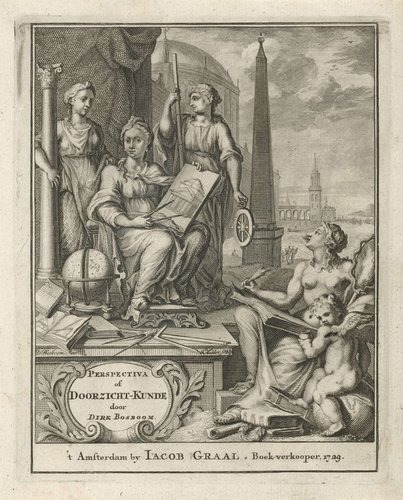
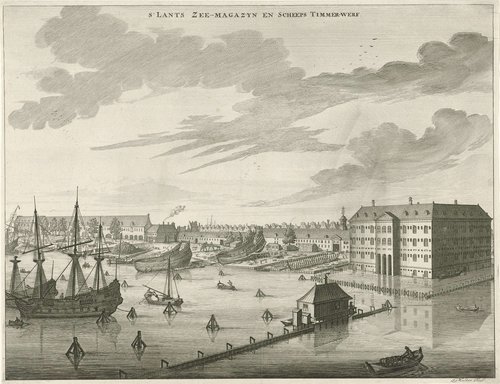
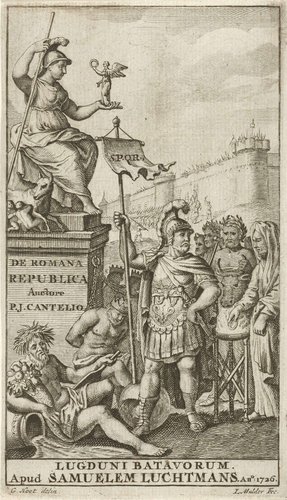
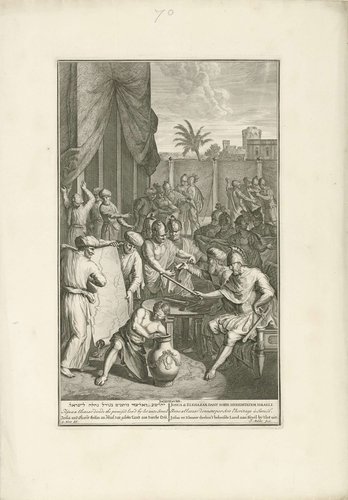
Joseph Mulder (1659/1660–1710 or later) was a renowned Dutch Golden Age printmaker whose work exemplifies the sophisticated reproductive engraving practiced in Amsterdam during the late seventeenth and early eighteenth centuries. Trained under notable masters including Bogaert and influenced by Romeyn de Hooghe, Mulder achieved particular distinction for his scientific illustrations, most notably his engravings for Maria Sibylla Merian's groundbreaking 'Metamorphosis Insectorum Surinamensium' (1705), and for important cartographic works including the first printed plan of Lima, Peru (1688). His versatility extended from natural history illustration to astronomical charts, from title page designs to maps, demonstrating the wide-ranging skills expected of master engravers in this period.
Joseph Mulder was born in 1659 or 1660 in the Dutch Republic. He received training from Bogaert and was also influenced by the work of Romeyn de Hooghe (1645–1708), one of the most accomplished and versatile Dutch engravers of the period. De Hooghe was known for his political prints, book illustrations, and elaborate allegorical compositions, and his example would have shown Mulder the range of possibilities available to skilled engravers.
Amsterdam in the late seventeenth century remained a major center for publishing and printmaking despite the Dutch Republic's declining political and economic power. The city's publishers produced books, maps, prints, and scientific illustrations for markets throughout Europe. For talented engravers like Mulder, this infrastructure provided steady employment and opportunities to work on prestigious projects.
In 1688, Mulder created one of his most historically significant works: the first printed plan of Lima, Peru. This map represented cutting-edge geographical knowledge, as European understanding of South American urban geography was still limited and evolving. The production of such maps required not only engraving skill but also understanding of cartographic conventions, the ability to translate geographical information into visual form, and the precision necessary for accurate representation of urban layouts.
Mulder's most celebrated achievement was his collaboration with Maria Sibylla Merian (1647–1717) on the illustrations for 'Metamorphosis Insectorum Surinamensium' (Metamorphosis of the Insects of Surinam), published in 1705. This groundbreaking work documented the life cycles of insects and other creatures Merian had observed during her expedition to Surinam (Dutch Guiana) from 1699 to 1701. Merian's field drawings, based on direct observation of tropical insects, plants, and amphibians, required engravers of exceptional skill to translate her watercolors into prints.
Mulder worked alongside Pieter Sluyter on the engravings for Merian's book. The project demanded not only technical precision but also sensitivity to scientific accuracy and aesthetic beauty. The plates needed to convey biological information clearly while also functioning as beautiful images. Mulder's engravings succeeded in both regards, helping make Merian's book a landmark in both natural history and book illustration.
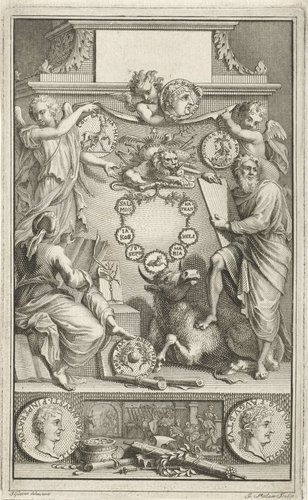
Another significant commission was creating an engraving for the title page of the 1700 Leiden edition of Galileo Galilei's 'Dialogue Concerning the Two Chief World Systems.' This elaborate frontispiece depicted Aristotle, Ptolemy, and Copernicus, representing different models of the cosmos. Such allegorical title pages were important elements of book design in this period, establishing the intellectual framework and authority of the text while demonstrating the publisher's commitment to high-quality production.
Mulder also created astronomical charts that advanced the fields of cartography and uranometry (the mapping of stars). These technical illustrations required precision and clarity, as they served practical purposes for navigation and astronomical observation while also needing to be visually coherent and aesthetically pleasing.
His work took him abroad as well. He produced an ambitious engraving of Vienna from a bird's-eye view, executed in nine separate prints, each measuring approximately one by two feet. When assembled, these prints created a monumental panoramic view of the imperial capital, demonstrating Mulder's ability to handle large-scale projects requiring careful planning and precise execution to ensure the separate sheets aligned correctly.
Artheon Research Team
Last updated: 2025-11-09
Biography length: ~821 words
Wikidata (CC0); Getty ULAN (ODC-By)