
Washer for Wine Cups
1800
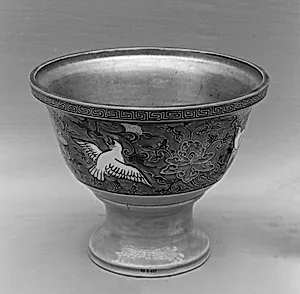
Medium
Clay covered with colored and transparent glazes over relief (Kyoto ware)
Dimensions
H. 5 7/8 in. (14.9 cm); Diam. of rim 7 1/4 in. (18.4 cm); Diam. of base 3 7/8 in. (9.8 cm)
Classification
Ceramics
Culture & Period
Japan · Edo period (1615–1868)
Department
Asian Art
Museum
Metropolitan Museum of Art, New York, NY
Credit
Gift of Charles Stewart Smith, 1893
Accession Number
93.3.427
Rights
Public Domain
Tags
Art Historical Context
Created in 1800 during Japan’s Edo period, this Kyoto ware ceramic by Eiraku Hozen exemplifies the refined aesthetic of the time. Hozen, a master potter, worked within a tradition that blended with artistic expression, often producing pieces for tea ceremonies and social rituals. The vessel’s modest yet elegant form reflects the period’s appreciation for objects that elevated everyday experiences. Measuring just under six inches high, the washer for wine cups is fashioned from clay adorned with colored and transparent glazes over relief decoration. This technique allowed the artist to create textured surfaces that catch light and emphasize motifs—here, the birds noted in the museum’s records. Such glazes and relief work were hallmarks of Kyoto ware, prized for their vibrant yet harmonious effects. Donated to the Metropolitan Museum in 1893, the piece offers a window into Edo-period craftsmanship, where ceramics served both practical purposes, like rinsing sake cups, and as quiet celebrations of nature’s beauty.
About the Artist
Eiraku Hozen · 1795–1854
Eiraku Hozen (1795–1854) was a celebrated Japanese ceramic artist and the sixteenth-generation head of the Nishimura family, a Kyoto dynasty of potters whose work was closely associated with the tastes of the imperial court and the refined aesthetic culture of the ancient capital. Operating under the artistic name Eiraku — a name that would become synonymous with a particular style of elegant, tec...