
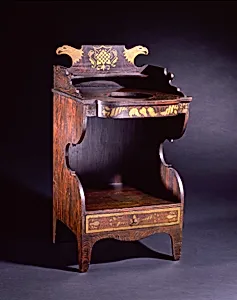
Washstand with Eagle Heads
1830-1845
Medium
Decorative Arts-Furniture
Classification
Decorative Arts-Furniture
Department
Smithsonian Collection
Museum
Smithsonian American Art Museum
Credit
Smithsonian American Art Museum, Gift of Herbert Waide Hemphill, Jr. and museum purchase made possible by Ralph Cross Johnson
Accession Number
1986.65.95A-B
Rights
Public Domain
Tags
Art Historical Context
Step into a corner of early 19th-century American domestic life with the *Washstand with Eagle Heads*, crafted between 1830 and 1845 by an unidentified artisan. This functional piece of furniture, typical of the pre-indoor-plumbing era, served as basin stand for personal grooming rituals. Its standout feature—boldly carved eagle heads—ev the soaring spirit of the young United States, where the bald eagle had become a potent national emblem since the Revolutionary War, symbolizing strength, freedom, and vigilance. As a prime example of vernacular decorative arts, the washstand showcases the ingenuity of American folk craftsmen. Made likely from wood with intricate carving techniques, it blends everyday utility with patriotic flair, reflecting the era's rising middle-class pride and neoclassical influences drawn from federal architecture. Such furniture pieces were hallmarks of regional workshops, prioritizing bold motifs over fine artistry. Now treasured in the Smithsonian American Art Museum, thanks to the gift of folk art collector Herbert Waide Hemphill, Jr., and a museum purchase, this washstand invites us to ponder the artistry hidden in humble homes. Imagine the morning light catching those fierce eagle gazes as a family began their day— a timeless snapshot of American identity.
About the Artist
Unidentified ( ) · –