
Watch
ca. 1632–40
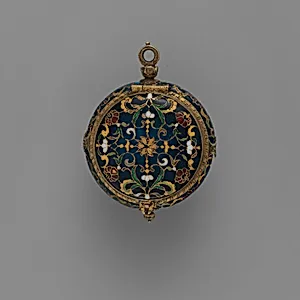
Medium
Case: enamel, glass, gold, and gilded brass; Movement: gilded brass and steel, partly blued
Dimensions
Diameter: 1 1/2 in. (3.8 cm)
Classification
Horology
Culture
British, London movement with French case
Department
European Sculpture and Decorative Arts
Museum
Metropolitan Museum of Art, New York, NY
Credit
Gift of J. Pierpont Morgan, 1917
Accession Number
17.190.1477
Rights
Public Domain
Tags
Art Historical Context
This exquisite pocket watch, crafted by London watchmaker Simon Hackett around1632–40, exemplifies the pinnacle of 17th-centuryology—a field blending precision engineering with opulent artistry. Measuring just 1 1/2 inches in, its French case of enamel, glass, gold, and gilded brass likely features delicate floral motifs, popular decorative theme evoking the natural beauty prized in Baroque-era luxury goods. The British movement, made of gilded brass and steel blued accents, showcases Hackett's mastery in creating reliable, compact mechanisms for personal timekeeping. In an era when watches were rare status symbols for the elite, this hybrid piece highlights cross-cultural collaboration: London's burgeoning watchmaking industry paired with French enameling expertise. Enamel techniques, fired onto metal for vibrant, durable designs, protected the intricate gears while turning the watch into wearable jewelry. Blued steel added a subtle iridescence, a labor-intensive process that signaled superior craftsmanship. Today, housed in The Metropolitan Museum of Art's European Sculpture and Decorative Arts department (gift of J. Pierpont Morgan, 1917), it reminds us how early modern innovations shrank time itself into a flowery, golden treasure—portable proof of humanity's quest to master the clock.