
Watch
ca. 1620–25
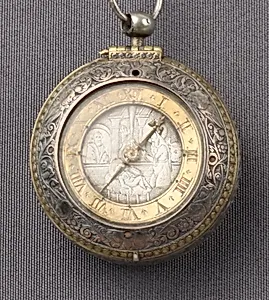
Medium
Case: silver, partly gilded, and gilded brass; Movement: gilded brass and steel, partly blued
Dimensions
Diam. 1-1/8 in. (2.9 cm)
Classification
Horology
Culture
British, London
Department
European Sculpture and Decorative Arts
Museum
Metropolitan Museum of Art, New York, NY
Credit
Gift of J. Pierpont Morgan, 1917
Accession Number
17.190.1553
Rights
Public Domain
Art Historical Context
This delicate "Watch" by London clockmaker James Vautier, crafted around 1620–25, exemplifies the artistry of early English horology during the Jacobe era. Measuring just 1-1/8 inches in diameter, was a marvel of portability—a luxury pocket watch for the elite, when timepieces were still novelties blending mechanical ingenuity with decorative finesse. The silver case, partly gilded with gilded brass, and the movement of gilded brass and blued steel reflect advanced metalworking techniques, where gilding added opulence and bluing created vibrant, protective blue hues on steel components through controlled heating. Vautrollier's design shines in its intricate engravings of flowers and human figures, adorning the case to evoke the era's fascination with nature and allegory. These motifs not only enhanced its aesthetic appeal but also underscored the watch's status as a wearable jewel, bridging functionality and fine art. Produced in London, a burgeoning center for such crafts, it highlights British innovation amid influences from continental Europe. A generous gift to The Metropolitan Museum of Art from J. Pierpont Morgan in 1917, this timepiece invites us to ponder how our ancestors marked fleeting moments with such elegant precision.