
Water Pipe Base
Unknown Artist
19th century
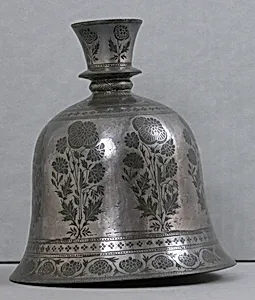
Medium
Zinc alloy; cast, engraved, inlaid with silver (bidri ware)
Dimensions
H. 7 in. (17.8 cm) Diam. 5 3/4 in. (14.6 cm)
Classification
Metal
Department
Islamic Art
Museum
Metropolitan Museum of Art, New York, NY
Credit
Rogers Fund, 1908
Accession Number
08.102.2
Rights
Public Domain
Tags
Art Historical Context
This exquisite *Water Pipe Base* from 19th century exemplifies the masterful bidri ware technique, a of Islamic metalwork from the Deccan region of India. Craft from zinc alloy, the piece was cast, finely engraved, and inlaid with silver to create intricate floral motifs—evident in its delicate blooming patterns that evoke the lush gardens celebrated in Islamic art. Standing 7 inches high and5¾ inches in diameter, its compact form belies the labor-intensive process: artisans oxidized the zinc with a special soil mixture, causing the gleaming silver designs to pop against the darkened background, ensuring both beauty and durability. As a base for a water pipe (hookah), this object reflects the social customs of 19th-century South Asian Islamic culture, where such ornate smoking accessories were prized among elites for gatherings and relaxation. Bidri ware, originating in Bidar under Muslim patronage, blended Persian influences with local innovation, symbolizing luxury and craftsmanship during a time of princely patronage post-Mughal era. Its floral engravings underscore the Islamic aversion to figurative imagery, favoring nature's geometry for spiritual harmony. Acquired through the Rogers Fund in 1908, this rare survivor now graces the Metropolitan Museum of Art's Islamic Art department, offering a tangible link to everyday opulence in bygone eras.