
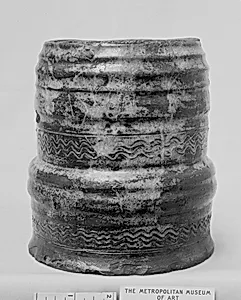
Water Pot
Unknown Artist
18th century
Medium
Clay with incised pattern, covered with glaze (Karatsu ware, Satsuma type)
Dimensions
H. 6 1/8 in. (15.6 cm); Diam. 5 1/2 in. (14 cm)
Classification
Ceramics
Culture & Period
Japan · Edo period (1615–1868)
Department
Asian Art
Museum
Metropolitan Museum of Art, New York, NY
Credit
Gift of Mr. and Mrs. Samuel Colman, 1893
Accession Number
93.1.84
Rights
Public Domain
Art Historical Context
This delicate water pot, crafted by an unknown artist in th-century Japan during the period (1615–1868), embodies the refined simplicity of Karatsu ware in its Satsuma type. Standing just 6⅛ inches tall and 5½ inches in diameter, it made from clay adorned with incised patterns—delicate lines carved into the surface before glazing. This technique creates subtle textures that catch the light, highlighting the potter's skillful control over form and finish. Karatsu ware, originating from Japan's Kyushu region, was celebrated for its rustic yet elegant aesthetic, bridging utility and artistry. During the Edo era's era of peace and cultural flourishing, such pots served practical roles in tea ceremonies (chanoyu) or as vessels for flower arranging (ikebana), reflecting Zen-inspired ideals of wabi-sabi—beauty in imperfection and transience. The glossy glaze not only protected the clay but enhanced its organic warmth, making everyday objects objects of quiet contemplation. A generous gift to the Metropolitan Museum of Art from Mr. and Mrs. Samuel Colman in 1893, this piece invites visitors to appreciate how Japanese ceramics transformed humble materials into timeless treasures, whispering stories of tradition across centuries.