
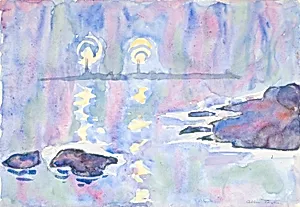
Watercolor no. 73, Blue and Lavender
1928
Medium
Painting
Classification
Painting
Department
Smithsonian Collection
Museum
Smithsonian American Art Museum
Credit
Smithsonian American Art Museum, Gift of the Allen Tucker Memorial
Accession Number
1966.34.7
Rights
Public Domain
Tags
Art Historical Context
**Watercolor no. 73, Blue and** (1928) by Allen captures the artist's masterful use of watercolor, a medium that highlights translucent layers and fluid brushwork. Housed in the Smithsonian American Art Museum as a gift from the Allen Memorial, this painting evokes serene blues and lavenders—likely inspired by water motifs, as by its tags—creating a dreamlike atmosphere through delicate washes and subtle tonal shifts. Tucker's choice of watercolor underscores its spontaneity, allowing light to interplay with color in ways oils could not. Allen Tucker (1866–1939), a key figure in early 20th-century American modernism, bridged the gritty realism of the Ashcan School with vibrant post-impressionism. By 1928, after years studying in Europe and collaborating with artists like Robert Henri, Tucker had settled into bold, expressive landscapes and abstracts from his Woodstock, New York, studio. This piece reflects his evolving fascination with color harmony and nature's ephemerality during the interwar period, a time when American artists embraced personal expression amid rapid social change. As part of the Smithsonian's collection, *Watercolor no. 73* exemplifies Tucker's technical innovation and emotional depth, inviting viewers to ponder water's fluidity as a metaphor for life's transience. Its cool palette offers a peaceful respite, making it a gem for those exploring American watercolor traditions.