
Watergeuzen
1600 - 1699
Medium
casting
Dimensions
3.2; 24.83; 3.8
Rights
Public Domain
About this artwork
Schenking van mevrouw J.M. van Gelder-Nijhoff
Art Historical Context
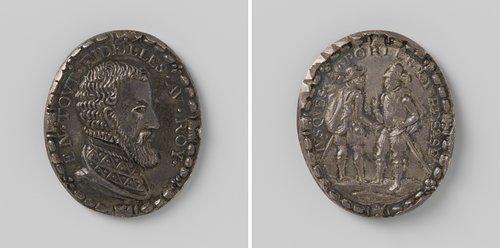
Nestled among treasures of the Dutch Golden Age, *Watergeuzen* is a diminutive bronze cast by Flemish sculptor and medallist Jacques Jonghelinck (c. 1535–1606). Dated between 1600 and 1699, this petite artwork measures just 3.8 cm long, 3.2 cm wide, and weighs .83 grams—perfect sized for a collector's medal or pocket token. Jonghelinck, brother to renowned sculptor Hans Jonghelinck, was celebrated for his intricate portrait medals and allegorical bronzes, often cast using the lost-wax technique to capture fine details in miniature form. The title *Watergeuzen* evokes the heroic "Sea Beggars," Dutch privateers who defied Spanish Habsburg rule during the Eighty Years' War (1568–1648). These Protestant rebels, led by figures like William of Orange's supporters, famously seized the port of Brielle in 1572, igniting the Dutch Revolt and paving the way for independence. This piece likely commemorates their daring naval exploits, symbolizing resistance and maritime prowess in a turbulent era of Reformation and rebellion. Generously donated by Mrs. J.M. van Gelder-Nijhoff, *Watergeuzen* exemplifies the era's medal tradition—affordable yet sophisticated art that preserved history in metal. Its small scale invites close contemplation, revealing Jonghelinck's mastery in evoking epic narratives through exquisite craftsmanship. A poignant reminder of how art immortalizes the underdogs of history.