
Wealth and Benefits of the Spanish Monarchy under Charles III
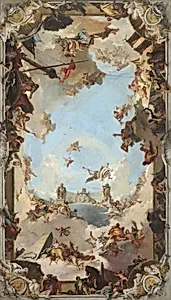
Medium
oil on canvas
Dimensions
overall: 181.8 x 104.3 cm (71 9/16 x 41 1/16 in.) framed: 192.4 x 115.3 cm (75 3/4 x 45 3/8 in.)
Classification
Painting
Department
CIS-B
Museum
National Gallery of Art, Washington, D.C.
Credit
Samuel H. Kress Collection
Accession Number
1943.4.39
Rights
Public Domain
Art Historical Context
Giovanni Battista Tiepolo, leading Venetian Rococo master renowned for his exuberant frescoes and grandiose allegories, created *Wealth and Benefits of the Spanisharchy under Charles III* 1762. This oil on canvas painting, measuring nearly six feet tall, was commissioned during the enlightened reign of King Charles III, who modernized Spain through reforms in agriculture, trade, and infrastructure. Tiepolo, then working at the Spanish court, used the artwork to symbolize the prosperity and benevolence of the Bourbon monarch, blending mythology and royal iconography in a celebratory tribute. Tiepolo's virtuoso technique shines through in the luminous colors, dynamic compositions, and theatrical lighting that define his late Rococo style—a bridge between Baroque drama and emerging Neoclassicism. The canvas likely features personifications of abundance, such as cornucopias or river gods, evoking Spain's vast colonial wealth and Charles III's paternalistic rule, making it a prime example of 18th-century political propaganda art. Housed in the National Gallery of Art as part of the Samuel H. Kress Collection, this piece offers visitors a vivid glimpse into Enlightenment-era absolutism and Tiepolo's enduring influence on European decorative painting. Its grand scale invites awe, reminding us how art once glorified power with dazzling elegance.
About the Artist
Giovanni Battista Tiepolo · 1696–1770
Giovanni Battista Tiepolo (1696-1770) stands as the greatest decorative painter of eighteenth-century Europe, a Venetian master whose luminous frescoes and dynamic compositions defined the Rococo era's aesthetic zenith. Born in Venice on March 5, 1696, to a modest shipping merchant family, Tiepolo's extraordinary talent transcended his humble origins to establish him as the most sought-after artis...