
Weavers, Tomb of Khnumhotep
ca. 1897–1878 B.C.
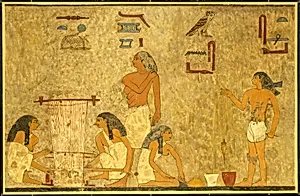
Medium
Paper, tempera paint, ink
Dimensions
facsimile: h. 66.5 cm (26 3/16 in); w. 103.5 cm (40 3/4 in) Scale 1:1 framed: h. 69.9 cm (27 1/2 in); w. 106.2 cm (41 13/16 in)
Classification
Facsimile, Khnumhotep (Beni Hasan 3), weavers
Period
Middle Kingdom
Department
Egyptian Art
Museum
Metropolitan Museum of Art, New York, NY
Credit
Rogers Fund, 1933
Accession Number
33.8.16
Rights
Public Domain
Tags
Art Historical Context
Step into the bustling workshop of ancient Egypt with *Weavers, Tomb of Khnumhot*, a meticulous 1:1 facsimile created by Egyptologist Norman de Garis. This vibrant scene, rendered in tempera paint and ink paper, captures men and women diligently at work spinning and weaving linen on looms, accompanied by explanatory hieroglyphs. Dating to Egypt's Middle Kingdom (Dyn 12, ca. 1897–1878 B.C.), it originates from the elaborate tomb chapel of Khnumhotep, a powerful nomarch buried at Beni Hasan. These tomb paintings served a profound purpose: to magically provision the deceased in the afterlife by depicting everyday labors. The *Weavers* panel offers a rare glimpse into Middle Kingdom society, showcasing gendered divisions of labor—women often handling finer spinning—while highlighting the Egyptians' mastery of flax-based textiles, essential for clothing, sails, and trade. Such scenes underscore the era's economic vitality and belief in eternal continuity. Davies's facsimile, acquired by The Metropolitan Museum of Art in 1933 via the Rogers Fund, preserves the original's vivid colors and precise details, making this slice of ancient life accessible today. It's a testament to how art bridged the mortal and divine, inviting us to marvel at the weavers' rhythmic toil across millennia.
About the Artist
Norman de Garis Davies · 1865–1941
Norman de Garis Davies (1865–1941) was a British Egyptologist and archaeological artist whose meticulous copies of ancient Egyptian tomb paintings constitute one of the most important records of pharaonic art ever made. Born in Ashton-under-Lyne, Lancashire, he originally trained for the ministry before being drawn into Egyptology through his involvement with the Egypt Exploration Fund in the 1890...