
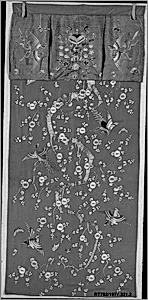
Wedding Festival Hanging
Unknown Artist
18th century
Medium
Silk and gold
Dimensions
83 x 37 in. (210.82 x 93.98 cm)
Classification
Textiles-Embroidered
Culture & Period
China · Qing dynasty (1644–1911)
Department
Asian Art
Museum
Metropolitan Museum of Art, New York, NY
Credit
Gift of Albert Gallatin Lanier, 1977
Accession Number
1977.321.2
Rights
Public Domain
Tags
Art Historical Context
This exquisite Wedding Festival Hanging, created in 18th-century China during the Qing dynasty, exemplifies the luxurious textile traditions of the era. Measuring over six feet in height, the embroidered silk panel was likely displayed during marriage celebrations to convey blessings of prosperity and harmony. The use of precious gold thread alongside vibrant silk highlights the opulence associated with such joyous occasions in imperial China, where textiles served not only as decoration but as symbols of status and good fortune. The artwork’s intricate embroidery features mythical creatures and floral motifs, common elements in Qing dynasty art that represent longevity, fertility, and protection. These designs were carefully stitched to catch the light, creating a dynamic visual effect when hung in festival settings. As part of the Metropolitan Museum’s Asian Art collection, this piece reflects the sophisticated craftsmanship of anonymous artisans who elevated embroidery to a high art form. Donated in 1977, the hanging offers modern visitors a glimpse into the rich ceremonial life of Qing society, where art and ritual intertwined to celebrate life’s milestones.