
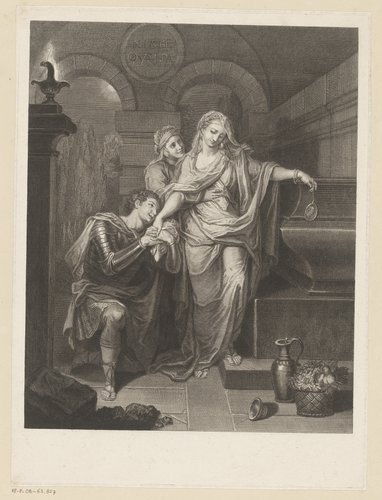
Weduwe van Ephese
1692 - 1739
Medium
etching
Dimensions
281; 379
About this artwork
collector's mark: Lugt 240
Art Historical Context
**Weduwe van Ephese (The Widow of Ephesus)** Created by the French engraver Louis Desplaces (active late 17th to early 18th century), this etching from around 1692–1739 captures the timeless tale of *The Widow of Ephesus*, a bawdy anecdote from the ancient Roman novel *Satyricon* by Petronius. The story depicts a virtuous widow, famed for her intense mourning, who succumbs to passion with a soldier guarding a crucified criminal. Desplaces, renowned for his reproductive prints after classical and contemporary masters, brings this moralistic yet sensual narrative to life with intricate line w...
About the Artist
Louis Desplaces · 1682–1739
**Louis Desplaces (1682–1739)** was a prominent French engraver and skilled draughtsman, born and died in Paris. Active from 1702 to 1739, he trained in the school of Gérard Audran, the renowned engraver whose precise and supple burin technique profoundly influenced Desplaces's own style. This classical foundation positioned him as a masterful reproductive engraver, bridging the meticulous 17th-ce...