
Weeping Cherry
Medium
Woodblock print; ink and color on paper
Dimensions
8 7/8 x 6 1/2 in. (22.5 x 16.5 cm)
Classification
Prints
Culture & Period
Japan · Edo period (1615–1868)
Department
Asian Art
Museum
Metropolitan Museum of Art, New York, NY
Credit
Bequest of Ellis G. Seymour, 1949
Accession Number
JP3152
Rights
Public Domain
Tags
Art Historical Context
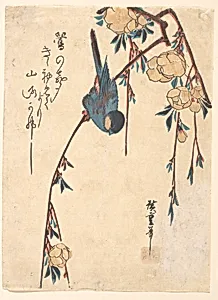
Utagawa Hiroshige (1797–1858), a master of ukiyo-e woodblock prints during Japan's Edo period (16151868), created *Weeping Cherry*, a depiction of nature's fleeting beauty. This small-scale print (8 7/8 x 6 1/2 in.), rendered in vibrant ink and color on paper exemplifies the collaborative artistry of woodblock printing: Hiroshige's precise designs were carved into wooden blocks by specialists, then hand-printed to achieve luminous hues and subtle gradients. Produced in an era when such prints democratized art for everyday viewers, it reflects ukiyo-e's focus on the "floating world" of ephemeral pleasures. The title evokes the iconic shidarezakura, or weeping cherry tree, with its cascading blossoms symbolizing life's transience—a core theme in Japanese culture, tied to hanami cherry-blossom viewing traditions. Accompanied by birds amid blooming flowers (as suggested by its tags), the composition captures serene harmony between flora and fauna, showcasing Hiroshige's poetic sensitivity to seasonal motifs. Though the exact date is unknown, it aligns with his renowned kacho-e (birds-and-flowers) works, blending realism with evocative atmosphere. Housed in the Metropolitan Museum of Art's Asian Art department through the bequest of Ellis G. Seymour in 1949, *Weeping Cherry* invites visitors to ponder nature's grace. Its intimate size made it perfect for personal appreciation, bridging Edo-era aesthetics with timeless wonder.
About the Artist
Utagawa Hiroshige · 1826–1869
Utagawa Hiroshige (1797–1858), born Andō Tokutarō, was the last great master of Japanese ukiyo-e woodblock printmaking and one of the most influential landscape artists in history. Born in Edo (modern Tokyo) into a low-ranking samurai family serving as fire wardens, Hiroshige transformed landscape printmaking into a poetic meditation on nature, weather, and everyday life. His revolutionary approac...