
Wheellock Rifle with Spanner, Shot Extracting Tool, and Shooting Patch
ca. 1665
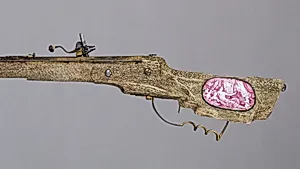
Medium
Steel, iron, gold, wood, antler, copper alloy, enamel, bone, textile
Dimensions
rifle (2015.446a): L. 43 1/2 in. (110.5 cm); L. of barrel 32 1/2 in. (82.6 cm); W. 8 1/4 in. (21 cm); D. 4 1/4 in. (10.8 cm); Wt. 9 lb. 7 oz. (4280.8 g); spanner (2015.446b): L. 7 3/4 in. (19.7 cm); W. 7/8 in. (2.2 cm); D. 1 9/16 in. (4 cm); Wt. 4 oz. (113.4 g); shot extracting tool (2015.446c): L. 1 13/16 in. (4.6 cm); Diam. 3/8 in. (1 cm); Wt. 0.5 oz. (14.2 g); shooting patch (2015.446d): Diam. approx. 1 3/8 in. (3.5 cm)
Classification
Firearms-Guns-Wheellock
Culture
German, Augsburg
Department
Arms and Armor
Museum
Metropolitan Museum of Art, New York, NY
Credit
Purchase, Arthur Ochs Sulzberger Bequest, 2015
Accession Number
2015.446a–d
Rights
Public Domain
Tags
Art Historical Context
Crafted around 1665 by the renowned Augsburg gunsmith Martin Kamer, this wheellock rifle exemplifies the pinnacle of 17th-century German firearms artistry. Housed in the Metropolitan Museum of Art's and Armor Department, the ensemble includes the rifle itself—over 43 inches long and weighing nearly 10 pounds—along with aanner for winding the mechanism, a shot-extracting tool, a shooting patch. Aug was a thriving hub for luxury gunmaking, where master craftsmen like Kammerer engineering precision with opulent decoration for elite patrons. The wheellock mechanism, a technological marvel of its era, used a spinning steel wheel to ignite gunpowder, offering reliability over earlier matchlocks and predating widespread flintlock adoption. What sets this rifle apart is its lavish materials: steel and iron for the barrel and lock, inlaid with gold, enamel, copper alloy, bone, antler, wood, and textile. Delicate motifs of women and putti (playful cherubs) adorn its surfaces, reflecting Baroque exuberance and the era's fusion of martial function with artistic splendor. As a status symbol for nobility, this piece highlights how firearms transcended utility to become portable sculptures, showcasing Kammerer's skill in blending deadly efficiency with aesthetic elegance. Visitors will appreciate its intricate details up close, a testament to Augsburg's golden age of arms.