
Whistle
1200–500 BCE
Medium
Ceramic
Dimensions
H. 2 3/8 × W. 1 1/2 × D. 1 1/4 in. (6 × 3.8 × 3.2 cm)
Classification
Ceramics-Musical Instruments
Culture
Cupisnique
Department
Arts of Africa, Oceania, and the Americas
Museum
Metropolitan Museum of Art, New York, NY
Credit
Gift of Conny and Fred Landmann, 1992
Accession Number
1992.60.3
Rights
Public Domain
Tags
Art Historical Context
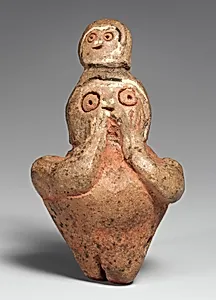
This petite ceramic whistle, crafted by Cupisnique artists between 1200 and 500 BCE, hails from the ancient Cupisnique culture of Peru's northern coast. Flourishing during the Early Horizon period, the Cupisnique people were masterful potters whose works bridged earlier regional traditions and foreshadowed the iconic styles of later cultures likeavín and Moche. artifact, now in the Metropolitan Museum of Art's Department of Arts of Africa, Oceania, and the Americas, their skill in producing functional yet evocative objects. Measuring just 2⅜ inches tall, the whistle is a marvel of miniature ceramic engineering—a double-chambered instrument that produces sound when blown, blending music with artistry. Its surface likely features stylized heads, a common Cupisnique motif evoking deities, ancestors, or supernatural beings, rendered with incised lines and modeled forms typical of their blackware or bichrome techniques. Such whistles were not mere toys but held ritual or ceremonial roles, possibly used in shamanic practices or communal gatherings to invoke spiritual forces. As a gift to the Met from Conny and Fred Landmann in 1992, this whistle offers a tangible link to pre-Columbian ingenuity, reminding us how sound and sculpture intertwined in ancient Andean life. Visitors, imagine the haunting tones echoing through coastal valleys millennia ago!