
Whistling vessel
400–500 CE
Medium
Ceramic
Dimensions
H. 11 7/8 x W. 7 3/4 x D. 5 1/4 in. (30.2 x 19.7 x 13.3 cm)
Classification
Ceramics-Containers
Culture
Maya
Department
Arts of Africa, Oceania, and the Americas
Museum
Metropolitan Museum of Art, New York, NY
Credit
The Michael C. Rockefeller Memorial Collection, Gift of Nelson A. Rockefeller, 1963
Accession Number
1978.412.90a, b
Rights
Public Domain
Tags
Art Historical Context
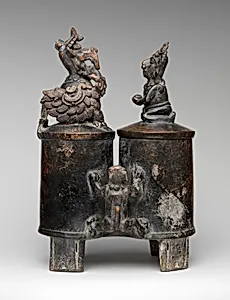
This enchanting whistling vessel, crafted by a Maya artist around 400–500 CE the Early Classic period, the sophistication of ancient Maya ceramics. Made from clay and standing about 12 inches tall, the vessel features modeled figures of birds, men, and creatures—common motifs in Maya art symbolizing the natural world, human life, and supernatural realms. When filled with liquid or blown into, it produces a distinctive whistling sound, blending functionality with artistry in a way that delighted both everyday users and ritual participants. Whistling vessels like this one were a hallmark of Maya pottery production, showcasing advanced techniques such as mold-making, slip decoration, and firing to achieve durability and vibrant details. They likely served dual purposes: as practical containers for liquids and as acoustic instruments in ceremonies or social gatherings, reflecting the Maya worldview where sound, nature, and myth intertwined. Housed in the Metropolitan Museum of Art's Arts of Africa, Oceania, and the Americas department, this piece from The Michael C. Rockefeller Memorial Collection offers a window into a thriving Mesoamerican culture renowned for its astronomical knowledge, hieroglyphic writing, and monumental architecture. Today, it captivates visitors with its playful ingenuity, reminding us how Maya artisans transformed everyday objects into portals of cultural expression.