
Williams Carter
Medium
Classification
Department
Smithsonian Collection
Museum
Smithsonian American Art Museum
Credit
National Portrait Gallery, Smithsonian Institution; gift of Mr. and Mrs. Paul Mellon
Accession Number
S/NPG.74.39.12.41
Rights
Public Domain
Tags
Art Historical Context
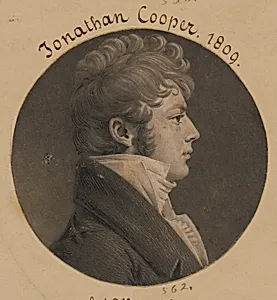
Created in 1809, this engraved portrait of Williams Carter captures the refined style of early American likenesses. French-born artist Balthazar Julien Fret de Saint-Mémin, who worked extensively in the United States, produced the print during a period when demand for affordable, reproducible portraits was high among the new nation’s emerging elite. Saint-Mémin was renowned for his precise profile portraits, often created using the physiognotrace—a mechanical device that traced a sitter’s silhouette before the artist engraved the image on copper. The resulting prints could be produced in multiple impressions, making portraiture accessible beyond the wealthiest patrons. This example, now in the Smithsonian’s National Portrait Gallery, reflects both the technical ingenuity and the cultural importance of portraiture in documenting individuals during the early republic. As a gift of Mr. and Mrs. Paul Mellon, the work continues to offer modern viewers a glimpse into the visual language of identity and status in the young United States.