
Window
Unknown Artist
18th century
Medium
Gypsum, stained glass
Dimensions
Window: H. 23 1/4 in. (59.1 cm) W. 17 in. (43.2 cm)
Classification
Glass
Department
Islamic Art
Museum
Metropolitan Museum of Art, New York, NY
Credit
Gift of William R. Ware, 1893
Accession Number
93.26.13
Rights
Public Domain
Tags
Art Historical Context
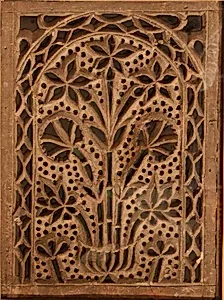
This delicate 18th-century window crafted from gypsum and stained glass, exemplifies the exquisite decorative arts of the Islamic world. Measuring just 23¼ inches high and 17 inches wide, likely served as a small architectural panel insert in a mosque, palace, or private residence, where sunlight would filter through its vibrant colors to create mesmerizing patterns on interior walls. The floral motifs—suggested by its tags—evoke the lush gardens of paradise, a recurring theme in Islamic design symbol beauty, renewal, and divine abundance. Gypsum, a soft yet durable stone, forms the structural frame, often intricately carved in Islamic architecture for both support and ornamentation. Paired with stained glass, a technique mastered in the region since medieval times, the window showcases colored glass pieces fired with metallic oxides to achieve rich hues of red, blue, green, and gold. This combination not only admitted light poetically but also protected interiors from harsh glare while enhancing spiritual ambiance. Acquired as a gift to the Metropolitan Museum of Art in 1893, this anonymous masterpiece invites visitors to ponder the anonymous artisans whose skill illuminated daily life and worship across the Islamic realms. Step closer and imagine the play of light through its blooms—a timeless bridge to an era of opulent craftsmanship.