
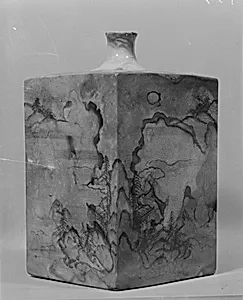
Wine bottle
Unknown Artist
ca. 1750
Medium
Clay, finely crackled glaze clouded with stains; decoration in underglaze blue (Kiyomizu ware)
Dimensions
H. 8 in. (20.3 cm); Diam. 4 7/8 in. (12.4 cm)
Classification
Ceramics
Culture & Period
Japan · Edo period (1615–1868)
Department
Asian Art
Museum
Metropolitan Museum of Art, New York, NY
Credit
H. O. Havemeyer Collection, Bequest of Mrs. H. O. Havemeyer, 1929
Accession Number
29.100.611
Rights
Public Domain
Art Historical Context
This elegant wine bottle, crafted around 1750 during Japan's Edo period (16151868), exemplifies the artistry of Kiyomizu from Kyoto's Kiyomizu district. Standing just 8 inches tall, it is made of clay coated in a finely crackled glaze that appears clouded with subtle stains, a hallmark technique of this pottery style. Delicate underglaze blue decorations enhance its surface, evoking the serene aesthetic of everyday yet sophisticated Japanese ceramics. Kiyomizu ware emerged in the 17th century, prized for its distinctive craquelure—those intentional fine cracks in the glaze—that create a misty, aged patina over time. Popular during the prosperous Edo era, such bottles were likely used for serving sake in tea houses or homes, blending functionality with subtle beauty. This piece reflects the period's urban culture, where pottery production boomed alongside kabuki theater, ukiyo-e prints, and a growing merchant class that appreciated accessible luxury. Now part of the Metropolitan Museum of Art's H. O. Havemeyer Collection, this anonymous masterpiece invites us to appreciate the anonymous potter's skill in capturing Japan's harmonious blend of form, texture, and tradition.