
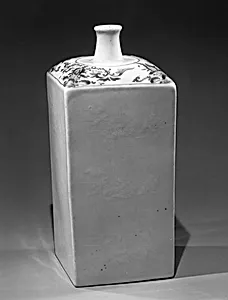
Wine bottle
Unknown Artist
late 17th century
Medium
Porcelain with underglaze blue (Arita ware)
Dimensions
H. 10 in. (25.4 cm); Diam. 4 3/8 in. (11.1 cm)
Classification
Ceramics
Culture & Period
Japan · Edo period (1615–1868)
Department
Asian Art
Museum
Metropolitan Museum of Art, New York, NY
Credit
The Harry G. C. Packard Collection of Asian Art, Gift of Harry G. C. Packard, and Purchase, Fletcher, Rogers, Harris Brisbane Dick, and Louis V. Bell Funds, Joseph Pulitzer Bequest, and The Annenberg Fund Inc. Gift, 1975
Accession Number
1975.268.584
Rights
Public Domain
Art Historical Context
This elegant wine bottle, crafted in late 17th-century Japan during the Edo period (1615–1868), exemplifies the artistry of Arita ware, a renowned porcelain tradition from the Saga Prefecture kilns. Standing 10 inches tall with a diameter of just over 4 inches, its slender form was ideal for storing and serving sake or imported wines, reflecting the era's growing sophistication in domestic luxury goods amid Japan's isolationist sakoku policy. Made of fine porcelain decorated with underglaze blue—a technique where cobalt pigment is applied to the unfired clay before a transparent glaze is added and fired at high temperatures—Arita pieces like this achieved vibrant, durable designs that resisted wear. Pioneered after Korean potters introduced porcelain-making secrets in the late 16th century, Arita kilns produced some of Japan's earliest hard-paste porcelains, rivaling Chinese exports and fueling trade with Europe via the Dutch East India Company. Housed in the Metropolitan Museum of Art's Asian Art Department as part of The Harry G. C. Packard Collection, this anonymous masterpiece highlights the Edo period's blend of technical innovation and aesthetic restraint, offering a window into Japan's ceramic golden age.