
Wine Cup
Unknown Artist
19th century
Medium
Red lacquer decorated with gold
Dimensions
H. 1 1/16 in. (2.7 cm); W. 5 1/2 in. (14 cm)
Classification
Lacquer
Culture & Period
Japan · Edo (1615–1868) or Meiji period (1868–1912)
Department
Asian Art
Museum
Metropolitan Museum of Art, New York, NY
Credit
Bequest of Stephen Whitney Phoenix, 1881
Accession Number
81.1.575
Rights
Public Domain
Tags
Art Historical Context
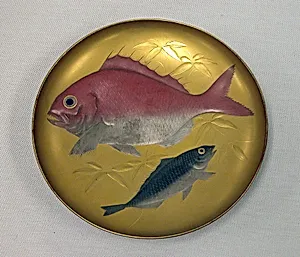
This exquisite Wine Cup, crafted in Japan during the 19th—likely in the late Edo period (1615–1868) or early Meiji era (1868–1912exemplifies the mastery of lacquerware, a hallmark of Japanese artistry. Made of vibrant red lacquer adorned with intricate gold decorations, the cup measures just 1 1/16 inches high and 5 1/2 inches wide, perfect for sipping sake in intimate gatherings. Its petite form and luxurious finish reflect the refined aesthetics of the time, when lacquer objects were prized status symbols among the elite. Japanese lacquer, derived from the sap of the urushi tree, is renowned for its durability, glossy sheen, and ability to hold fine gold details through techniques like makie, where powdered gold is sprinkled and polished into designs. Here, motifs of fish—evident in the tagging—likely evoke themes of abundance and good fortune, common in Japanese decorative arts. These cups were everyday luxuries, blending functionality with artistry during a period of cultural flourishing and transition to modernization. Now part of the Metropolitan Museum of Art's Asian Art collection, thanks to the 1881 bequest of Stephen Whitney Phoenix, this piece invites us to appreciate Japan's enduring tradition of transforming humble materials into objects of breathtaking beauty.