
Wine Cup
Unknown Artist
19th century
Medium
Red lacquer decorated with gold
Dimensions
H. 1 1/16 in. (2.7 cm); W. 5 3/8 in. (13.7 cm)
Classification
Lacquer
Culture & Period
Japan · Edo (1615–1868) or Meiji period (1868–1912)
Department
Asian Art
Museum
Metropolitan Museum of Art, New York, NY
Credit
Bequest of Stephen Whitney Phoenix, 1881
Accession Number
81.1.574
Rights
Public Domain
Tags
Art Historical Context
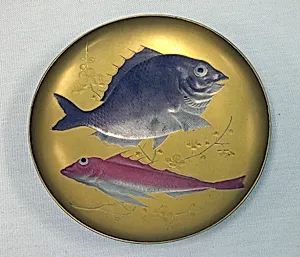
This exquisite wine cup, likely used for sipping sake, exemplifies the refined artistry of 19th-century Japanese lacware. Crafted from red lacquer adorned with intricate gold decorations—possibly featuring fish motifs, as suggested by its thematic tags—the cup measures a delicate 1 1/16 inches high and 5 3/8 inches wide. petite scale made it ideal for intimate gatherings, reflecting the everyday elegance of Japanese material culture during the late Edo (1615–1868) or early Me (1868–1912) period. Lacquerware, or urushi, was a pinnacle of Japanese craftsmanship, involving layers of sap from the lacquer tree, meticulously polished to a glossy sheen. The vibrant red hue, often derived from cinnabar, combined with gold inlays (a technique like hiramaki-e), created a luxurious, shimmering effect that symbolized prosperity and warded off evil. Fish designs, common in such objects, evoked themes of abundance and perseverance in Japanese folklore, making this cup not just functional but symbolically rich. Bequeathed to the Metropolitan Museum of Art in 1881 by Stephen Whitney Phoenix, this anonymous masterpiece highlights Japan's export of decorative arts during a time of cultural transition, bridging traditional Edo aesthetics with Meiji modernization. Visitors will appreciate its tactile beauty up close, a testament to the enduring allure of Asian lacquer traditions.